


Not all BJJ gis are built the same. Learn how to choose a BJJ gi & what seperates quality jiu-jitsu gear from the rest — fabric, construction, fit, and durability explained.
Not all gis are built the same. You find that out fast.
Some hold up for years of hard training. Others start falling apart before you’ve even hit your first stripe. The difference isn’t always the price tag. It’s the decisions the brand made — or didn’t make — before the gi ever reached you.
Whether you’re buying your first gi or replacing one that didn’t last, here’s what actually matters.
1. Fabric Weight and Weave Type
The jacket is where durability starts. And the weave type tells you most of what you need to know.
Pearl weave is the standard for a reason. It’s strong without being excessive, holds its structure under grip pressure, and survives hundreds of washes without breaking down. For everyday training, you want a jacket in the 400–500 GSM range — that’s grams per square metre. Heavy enough to be durable. Light enough to move.
Single weave is lighter and cheaper — but it shows wear faster. Gold weave sits in the middle. Double weave is built like a wall, but you’ll feel the weight by the end of a long session. Most serious training gis land on pearl weave for a reason.
What to look for: 450 GSM pearl weave. It’s the most proven construction for people who train consistently.
2. Pants Construction and Material
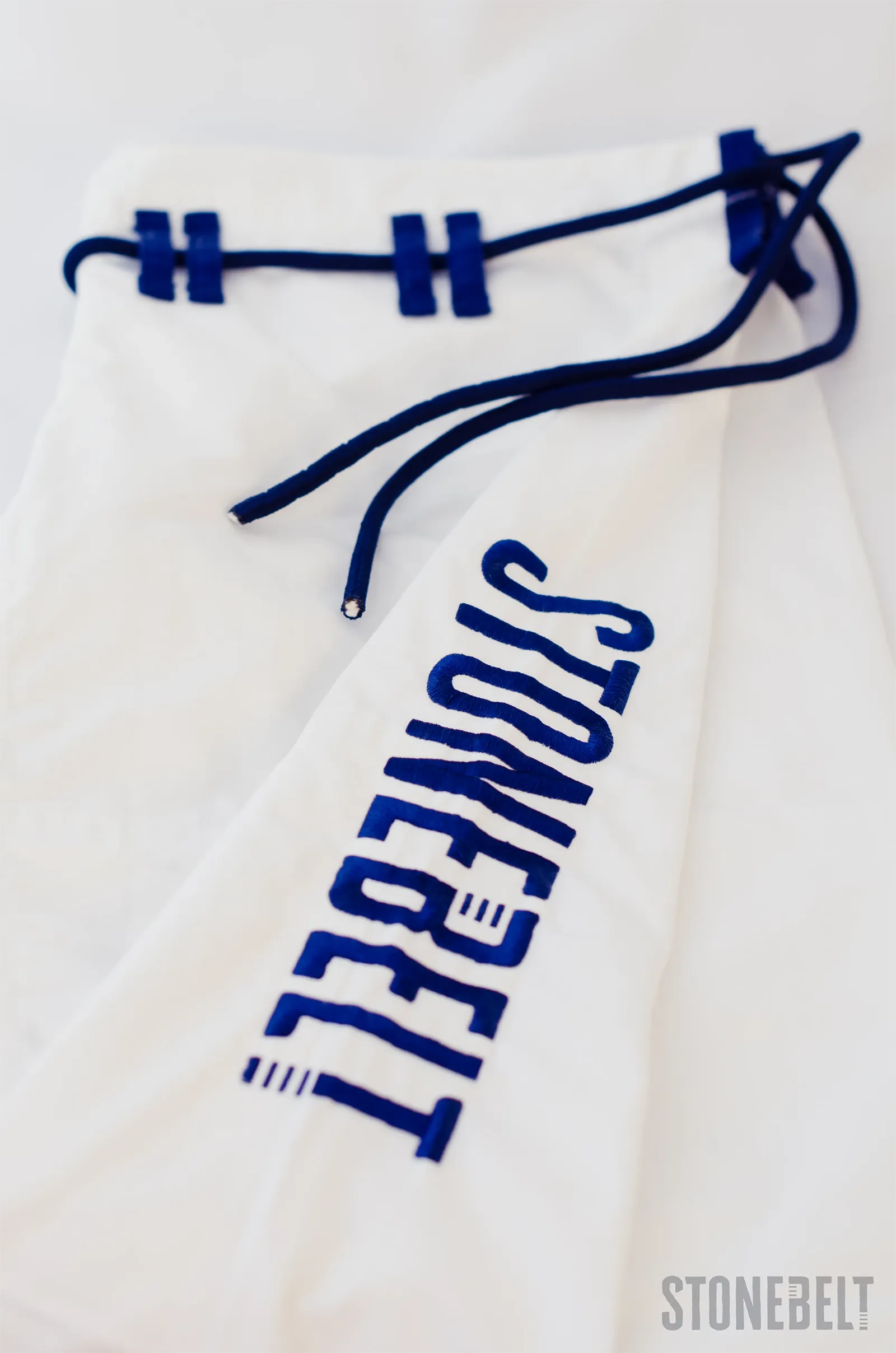
Pants are where a lot of brands cut corners. And it’s where you feel it first.
Thin cotton pants don’t survive real training. The knees go first. Then the crotch seam. Then you’re shopping for a new gi six months in.
Ripstop fabric is different. The interlocking weave pattern stops small tears from spreading. A 10 oz ripstop gives you the durability you need without restricting movement on the ground. That matters when you’re drilling guard passes and scrambles for an hour straight.
What to look for: 10 oz ripstop pants with reinforced knees and a solid drawstring. The details that get ignored are the ones that fail first.
3. Cotton or Cotton-Poly Blend — Know What You’re Choosing
This is one of those topics where the BJJ community has real opinions. And they’re not wrong.
100% cotton is still considered the premium standard by a large part of the community. There’s a reason for that. Cotton has a natural weight, a familiar feel, and a break-in quality that blends can’t fully replicate. Most traditional competition gis are cotton. It carries a certain prestige on the mat — and honestly, it’s earned.
The trade-offs are real though. Pure cotton shrinks more. It dries slower. With heavy washing cycles, it degrades faster.
A cotton-poly blend — like a 70/30 mix — deals with those practical realities. Less shrinkage means your sizing stays consistent. Faster drying matters when you’re training multiple times a week. The feel is slightly different from pure cotton. Some people notice it. Some don’t.
Neither is better. They serve different priorities. Know what yours are before you buy.
What to look for: Pre-shrunk fabric, regardless of composition. You want the sizing to be consistent from day one — not after you’ve washed it three times and it no longer fits the same way.
-
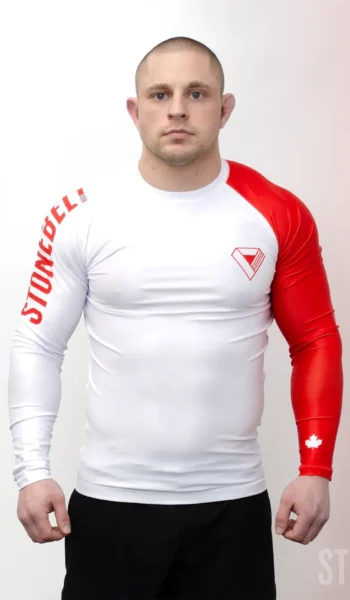 Heritage Long Sleeve Rashguard — White42.99$ USD
 -
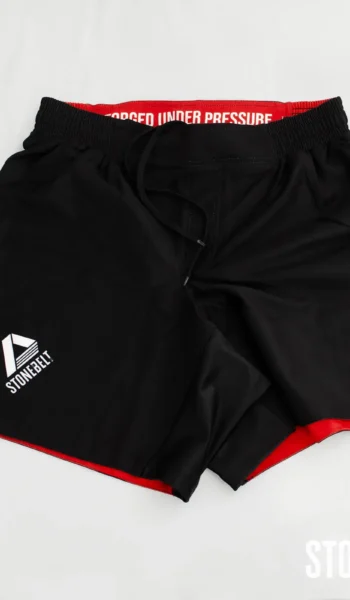 Heritage Shorts — Black46.99$ USD
 -
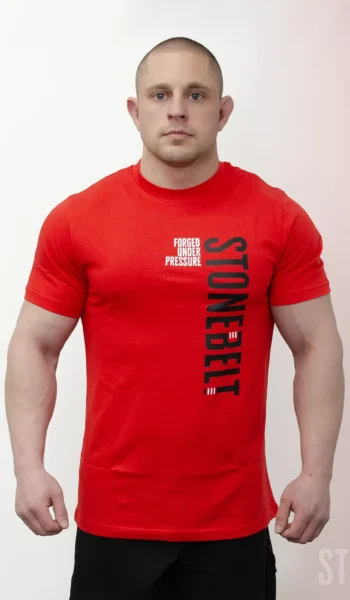 Classic Logo Tee27.99$ USD
 -
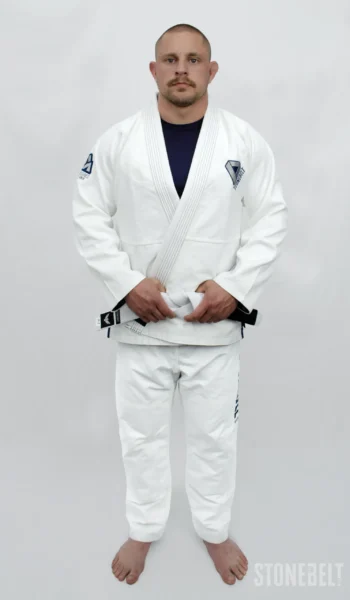 Heritage BJJ Gi — White129.99$ USD
 -
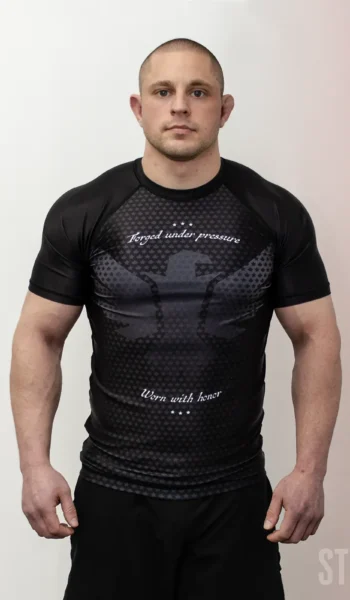 Legion Rashguard — Black39.99$ USD
 -
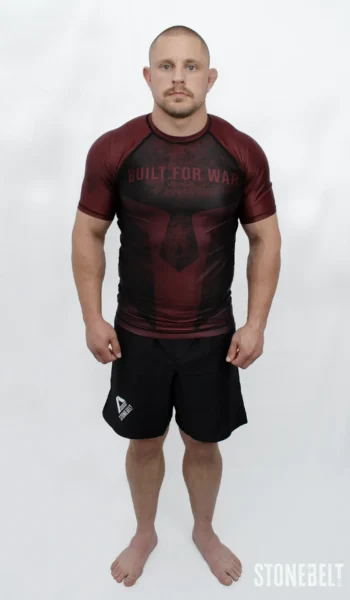 Foundry Rashguard — Deep Red39.99$ USD
4. Stitching and Reinforcement
You can’t see stitching quality in a product photo. That’s exactly why it gets overlooked — and exactly why it matters.
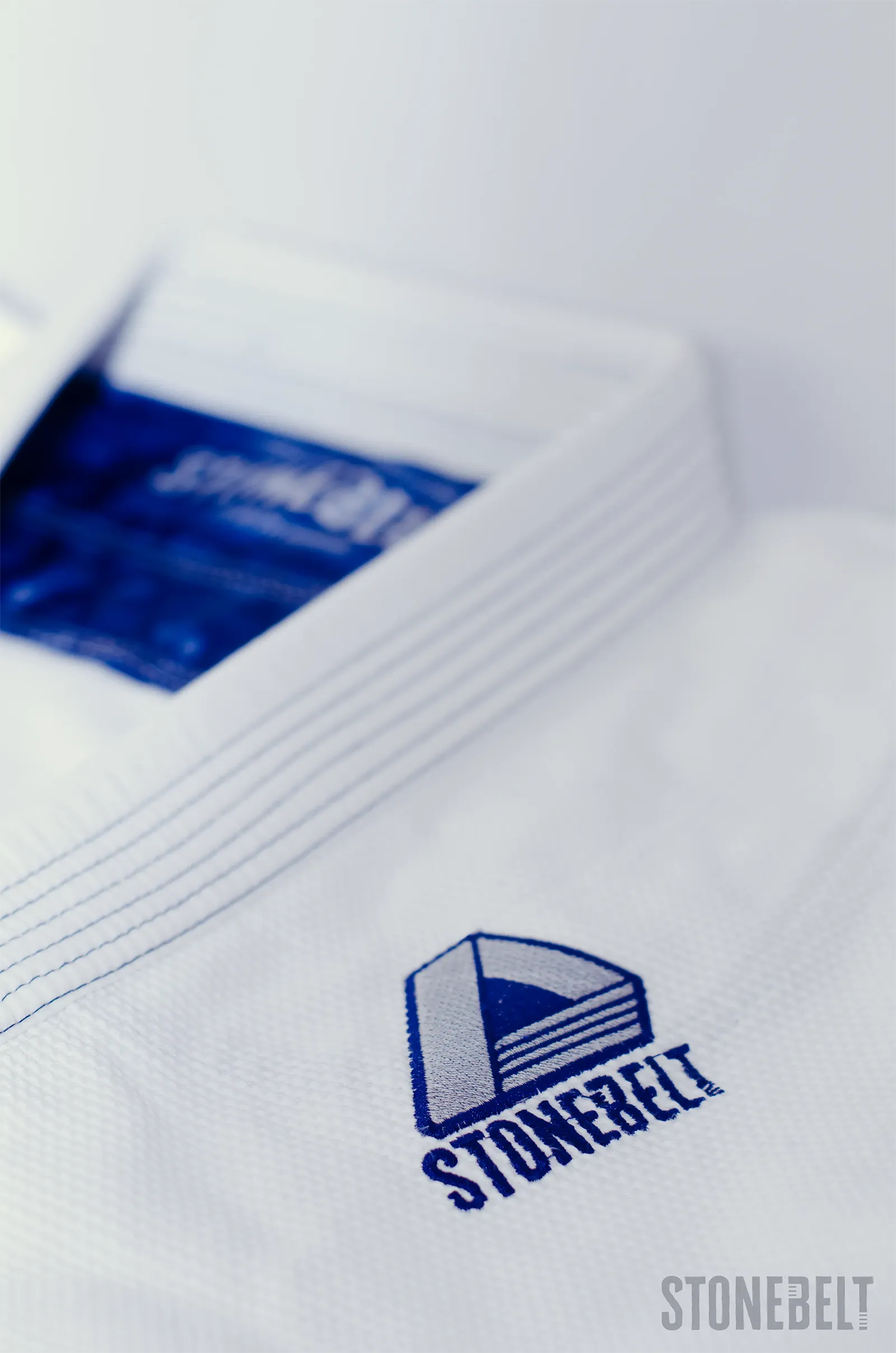
Multi-row stitching at the stress points — collar, sleeve openings, jacket hem, crotch seam, knee panels — is what separates a gi that lasts from one that slowly comes apart. When you’re drilling collar grips and sleeve grips at full intensity, those seams are taking real force. They need to be built for it.
The lapel is worth a separate mention. An EVA foam lapel holds its shape over time. A cheap cotton-stuffed lapel compresses and collapses with use. Beyond durability, a firm lapel is harder to grip — which is a real advantage on the mat.
What to look for: Reinforced multi-row stitching everywhere it matters, and an EVA foam lapel. If a brand doesn’t talk about this, they probably didn’t build for it.
5. Sizing and Fit Consistency
BJJ sizing runs A0 to A5. But a size A2 from one brand can fit completely differently from an A2 from another. It’s one of the most frustrating parts of buying gear online.
Pre-shrunk fabric is a big part of this. If the gi shrinks after washing, you’re guessing on fit from the start. A pre-shrunk gi should fit the same way on day one as it does two years later.
Clear size charts with real measurements matter too. Not just A1/A2/A3 — actual numbers you can compare against what you’re wearing now.
What to look for: Detailed size charts, pre-shrunk construction, and a brand that offers exchanges. Especially if it’s your first gi.
6. IBJJF Compliance
If there’s any chance you’ll compete in an IBJJF event — even a local tournament, — your gi needs to meet IBJJF standards. Jacket length, sleeve length, collar thickness, pants length, colour. Show up with a non-compliant gi and you don’t get to compete. Simple as that.
Even if competition isn’t on your radar, IBJJF compliance tells you something important: the brand built the gi to real structural standards. Not just to look good in a photo.
What to look for: Look for a brand that is transparent about explicitly confirming IBJJF-compliant construction. Training Gis don’t need to be compliant, but if you plan on competing, its worth making the extra validation.
7. Design — Clean Beats Loud
I’ll be direct about this one.
Big patches, loud colours, oversized logos — that stuff looks good on Instagram. It doesn’t do anything for you on the mat. A clean, minimal design ages well. It works in any academy. It doesn’t draw attention away from your game.
There’s also a practical reason to keep it simple. Less embroidery means fewer rough edges against your training partners. Good design is considerate design.
Jiu-jitsu is a long road. Your gear should reflect that. Timeless beats trendy every time.
What It All Looks Like Together
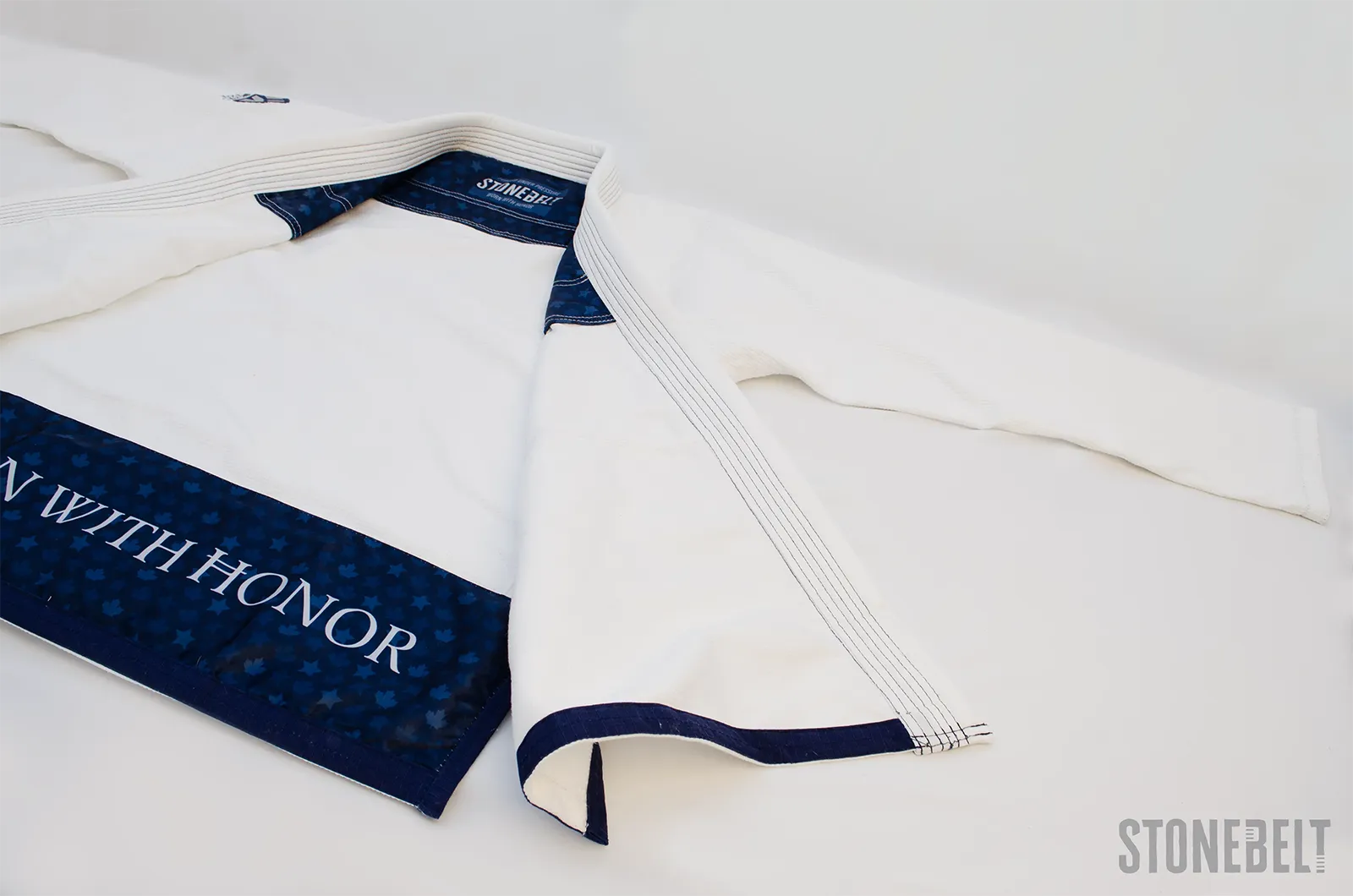
A well-built BJJ gi: 450 GSM pearl weave jacket. 10 oz ripstop pants. Multi-row reinforced stitching at every stress point. EVA foam lapel. Pre-shrunk fabric. Clean design.
That’s the exact specification we built into the Stonebelt Heritage BJJ Gi. Every decision was made by people who train. Every detail was chosen for a reason. No shortcuts.
If you’re just starting out, the Heritage Gi comes with a Stonebelt Ranked White Belt included. Everything you need to begin. Nothing you don’t.
The Bottom Line
The best Gi isn’t the most expensive one. It’s the one that still performs two years from now. The one built with real materials, real intention, and no compromises made for the sake of margins.
Buy gear that respects the long game. That’s the only game worth playing.