
Choosing between a long sleeve vs short sleeve rashguard for BJJ does not need to be complicated.
Most people are not really asking which one is “best” in some universal sense. They are trying to figure out which rash guard makes more sense for their training, their gym, and the way they like their gear to feel. That is the right question.
A good BJJ rash guard should move with you, stay in place, manage friction, and hold up over time. If it rides up, stretches out, or starts distracting you during scrambles, it is not doing much for you. Sleeve length matters, but only after the basics are handled properly.
So if you are comparing a long sleeve rash guard and a short sleeve rash guard for BJJ, here is what actually matters.
What a good BJJ rash guard should do
Before you even get into sleeve length, start with the fundamentals.
A proper BJJ rash guard should have a supportive compression fit without feeling restrictive. It should stay close to the body, allow full mobility, and keep its structure through hard rounds and repeated washing. The best rash guards also use durable performance fabric, reinforced stitching, and permanent sublimated graphics that will not crack, fade, or peel.
That is why construction matters more than hype. In grappling, the gear that lasts is usually the gear built with the right priorities from the start.
Long sleeve rash guard for BJJ: why some people prefer it
A long sleeve rash guard for BJJ gives you more coverage. That is the biggest reason practitioners choose it.
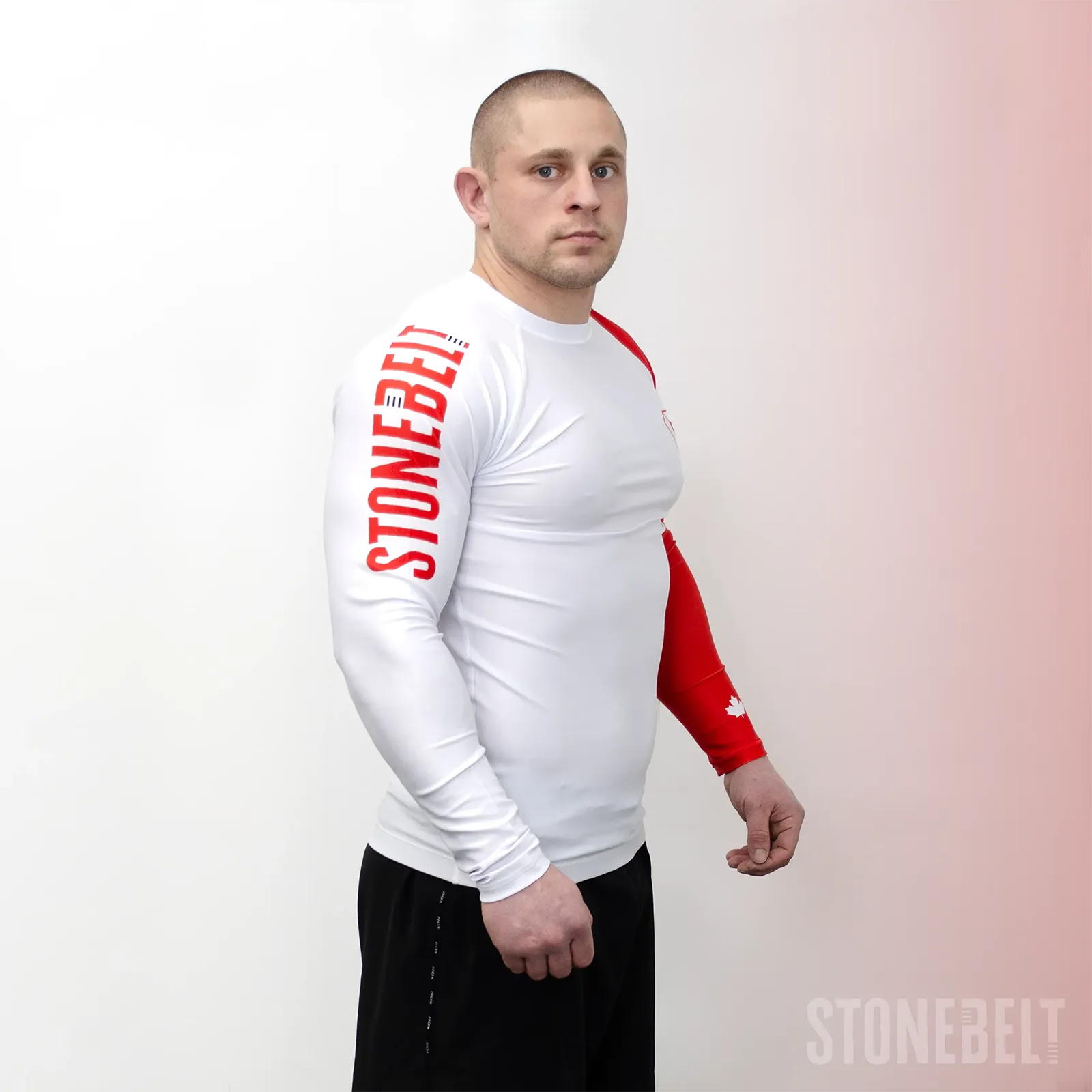
More sleeve means more skin protection during scrambles, posting, grip fighting, and high-friction exchanges. If you train a lot of no-gi, or you simply prefer more separation between your skin and the mat, long sleeve usually makes sense.
It also has a different feel. A good long sleeve rash guard can feel more secure and more complete on the body. Some practitioners like that locked-in feeling, especially during harder rounds where the rash guard needs to stay put and move naturally without becoming a distraction.
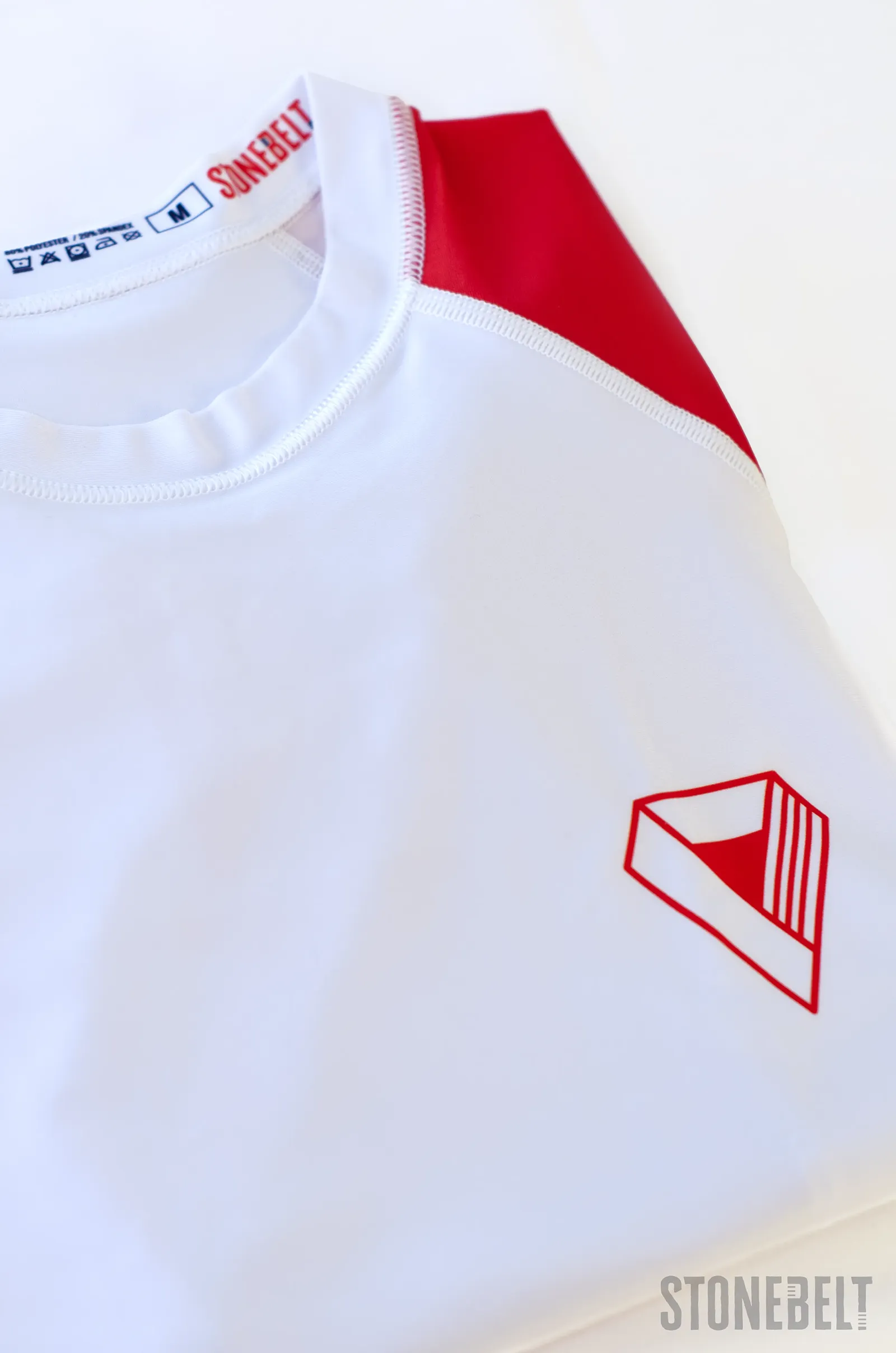
That is where the Heritage Long Sleeve BJJ Rashguard fits naturally. It is built around the kind of details that matter in real training: light performance fabric, flatlock stitching, full sleeve coverage, reliable compression, permanent sublimated graphics, and a silicone waist grip to help keep it secure during rolls and transitions.
Long sleeve is usually the better option for the practitioner who wants more coverage, more protection during grappling, and a training layer that feels stable through repeated rounds.
Short sleeve rash guard for BJJ: why some people prefer it
A short sleeve rash guard for BJJ usually wins on simplicity.
It feels lighter, cooler, and less present on the arms. In a warm academy or during higher-intensity sessions, that can matter a lot. Some practitioners simply do not like full-arm compression and prefer a rash guard that gives support through the torso and shoulders while keeping the arms less covered.
That does not make short sleeve less serious. It just makes it better suited to certain preferences and training environments.
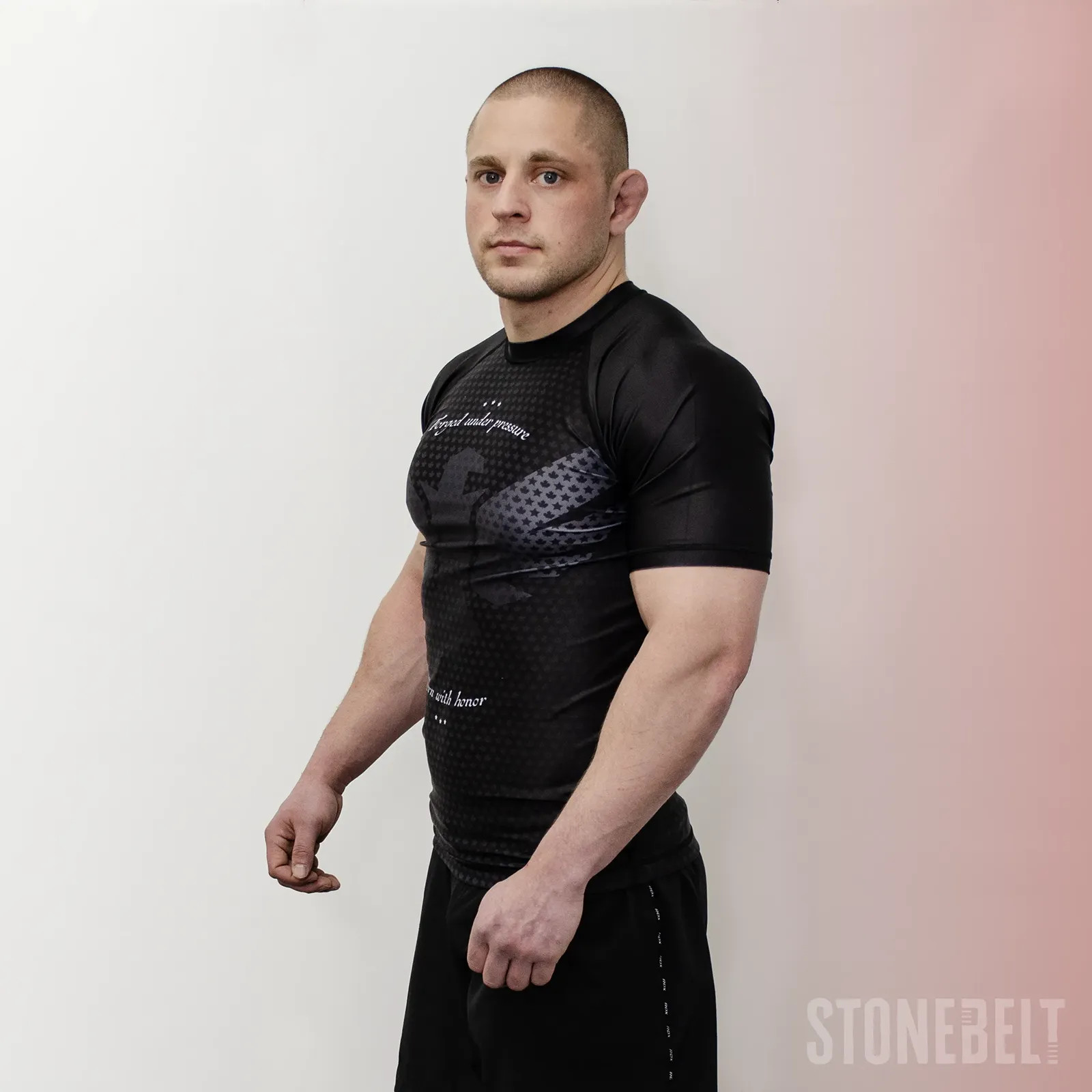
Short sleeve rash guards are often the natural choice for no-gi sessions, grappling rounds in hotter rooms, and conditioning work where you want less material and a more minimal feel. They still need the same fundamentals as any good rash guard: stretch, breathability, durability, flatlock seams, and a compression fit that stays close without restricting movement.
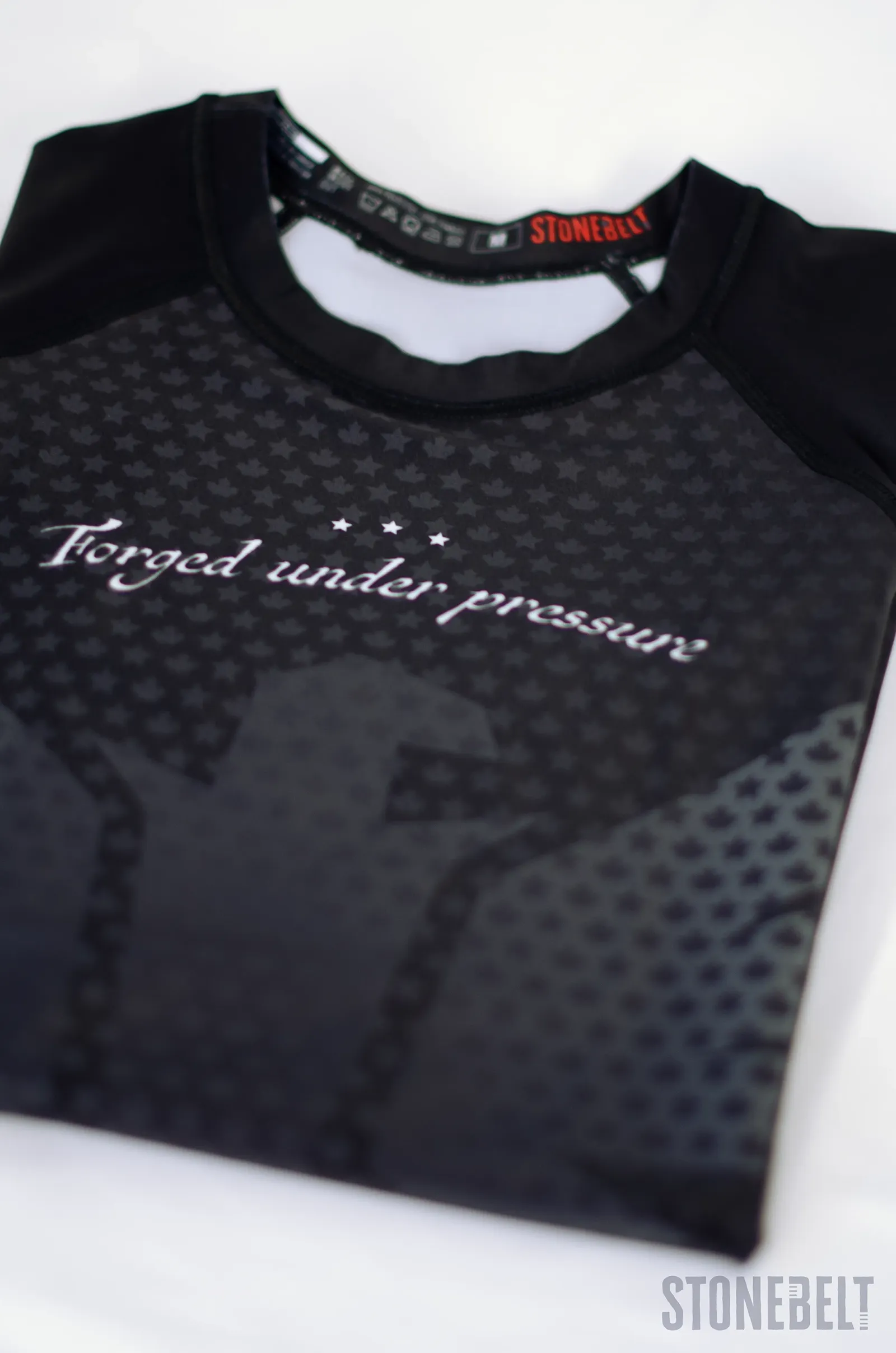
That is where the Legion Short Sleeve BJJ Rashguard makes sense. It is built for consistent training, with the same disciplined approach: 80/20 performance fabric, flatlock stitching, permanent sublimated graphics, a silicone waist grip, and a compression athletic fit designed for mobility.
For many practitioners, short sleeve is the rash guard they reach for when they want their gear to disappear and let them focus on training.
Long sleeve vs short sleeve rash guard for BJJ: the real difference
The comparison is simpler than people make it.
If you want more skin coverage and a more protected feel during grappling, choose long sleeve.
If you want a lighter feel, less material on the arms, and something that feels cooler during hard sessions, choose short sleeve.
That is really the core difference.
Both can work for no-gi. Both can work under the gi. Both can be the right choice when the fit and construction are right. The better option is not the one that sounds more serious. It is the one that fits the way you actually train.
How to choose a BJJ rash guard that fits your training
The best way to choose between long sleeve and short sleeve is to look at your real training habits.
Do you train in a hot room? Do you mostly do no-gi? Do you prefer extra skin coverage? Do you like a lighter feel on the arms? Do you want a rash guard mainly for rolling, or also for drilling, wrestling sessions, and strength work?
Those questions will usually tell you more than any generic list.
If you want more protection during scrambles and more coverage on the arms, long sleeve is probably the better fit.
If you want something lighter, cooler, and simpler, short sleeve is probably the better fit.
And if you train often enough, there is a good chance you will eventually want both.
Fit and durability matter more than sleeve length
This is the part people often overlook.
You can choose the right sleeve length and still end up with the wrong rash guard if the fit is off. A good compression rash guard for BJJ should stay close to the body without feeling restrictive. It should not bunch, roll up constantly, or need to be adjusted every few minutes.
The same goes for durability. A rash guard can look good in product photos and still fail where it counts if the seams start loosening, the fit gets sloppy, or the print wears down too quickly. For serious training, durable construction matters more than novelty.
That is one reason simple, disciplined design tends to age better. Clean lines, dependable performance fabric, and quality construction usually matter more over time than loud graphics and trend-based styling.
The bottom line
When people search long sleeve vs short sleeve rash guard for BJJ, they are usually hoping for one clear answer.
There is not one answer for everyone.
There is only the better choice for your training.
Choose a long sleeve rash guard if you want more coverage, more skin protection, and a more secure feel during grappling. Choose a short sleeve rash guard if you want a lighter, cooler, more minimal feel. Then make sure the rash guard itself is built properly, because sleeve length alone will not save a poorly made product.
Good gear should not distract from training. It should support it.
That is the standard that actually matters.
If you are looking for rashguards built around durability, mobility, and disciplined construction, explore the Stonebelt rashguard collection.