


When you’re shopping for a gi, the label raises more questions than it answers. GSM BJJ gi weave types. Ripstop pants. Some brands publish all of it. Others list almost nothing. And unless you already know what you’re looking at, none of it helps you decide.
450 GSM. Pearl weave. Ripstop pants. Pre-shrunk fabric. Some brands list all of it. Others list almost none of it. And unless you already know what you’re looking at, none of it tells you much.
This is a straight breakdown of what those numbers mean, which weave types exist, how they differ in practice, and how to use that information to make a better decision before you buy.
What is GSM — and why does it matter for BJJ?
GSM stands for grams per square metre. It measures the density of the fabric used to make the gi.
A higher GSM means heavier, denser fabric. A lower GSM means lighter material. Neither is automatically better — but the range matters.
For BJJ training, the practical range sits between 350 and 550 GSM. Below that, you’re usually looking at fabric that wears down quickly under heavy grips and repeated washing. Above that, the gi starts getting uncomfortable to move in during longer sessions.
The sweet spot for everyday training is 400–500 GSM. Heavy enough to hold structure under pressure. Light enough to train in without fighting the gi itself.
One thing worth knowing: most gis on the market today are coming in under 400 GSM. That’s a cost decision, not a construction decision. At lower densities, the fabric is cheaper to produce and the gi ships lighter. It also tends to break down faster. I’ll let you draw your own conclusions on why some brands choose this avenue.
When we specified the Heritage Gi, we landed on 450 GSM specifically because it sits above that floor. It gives you the structure to hold up under real grip pressure without adding unnecessary weight. We looked at lighter options and passed on them.
What to look for: 400–500 GSM for training. If a brand doesn’t publish their GSM, ask why.
Weave types — what actually changes
The weave pattern describes how the threads are interlocked in the fabric. Different patterns change the weight, the feel, the durability, and how the gi holds up over time.
There are four main weave types you’ll encounter in BJJ:
| Weave | Weight | Durability | Common Use | At Stonebelt |
| Single Weave | Light (250–350 GSM) | Lower | Budget / entry level | Rejected |
| Gold Weave | Medium (350–450 GSM) | Good | Training / competition | Considered |
| Pearl Weave | Medium (350–550 GSM) | High | BJJ standard | Chosen — 450 GSM |
| Double Weave | Heavy (600–800 GSM) | Very high | Judo / old school BJJ | Not applicable |
Single weave
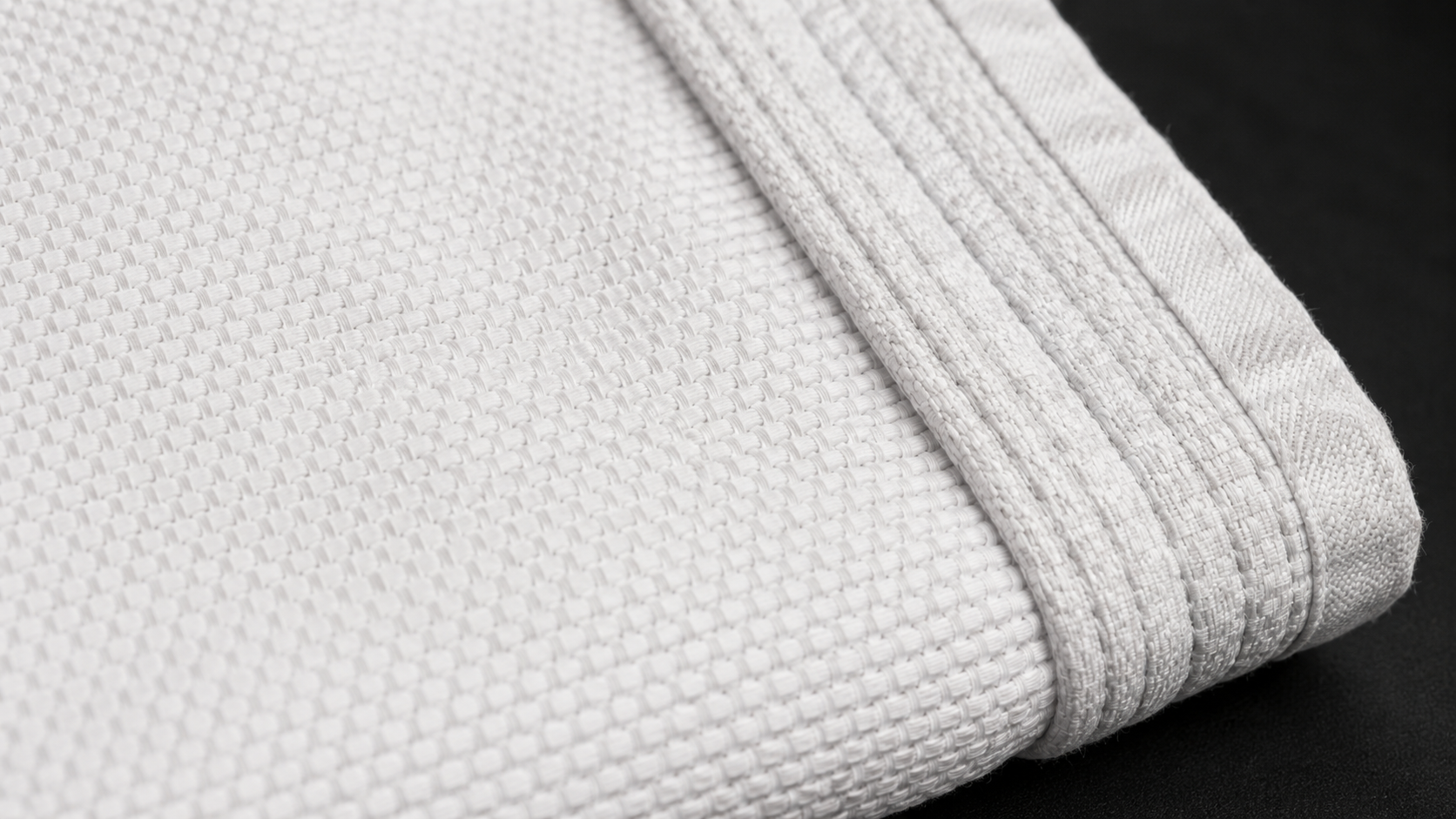
The lightest option. Single weave gis are typically in the 250–350 GSM range, which makes them cooler and easier to travel with. They’re also cheaper to produce.
The tradeoff is durability. Under heavy grips and repeated washing, single weave tends to lose its structure faster than denser alternatives. If you’re training consistently, a single weave gi will show wear earlier. We looked at single weave during development and ruled it out for that reason.
Gold weave
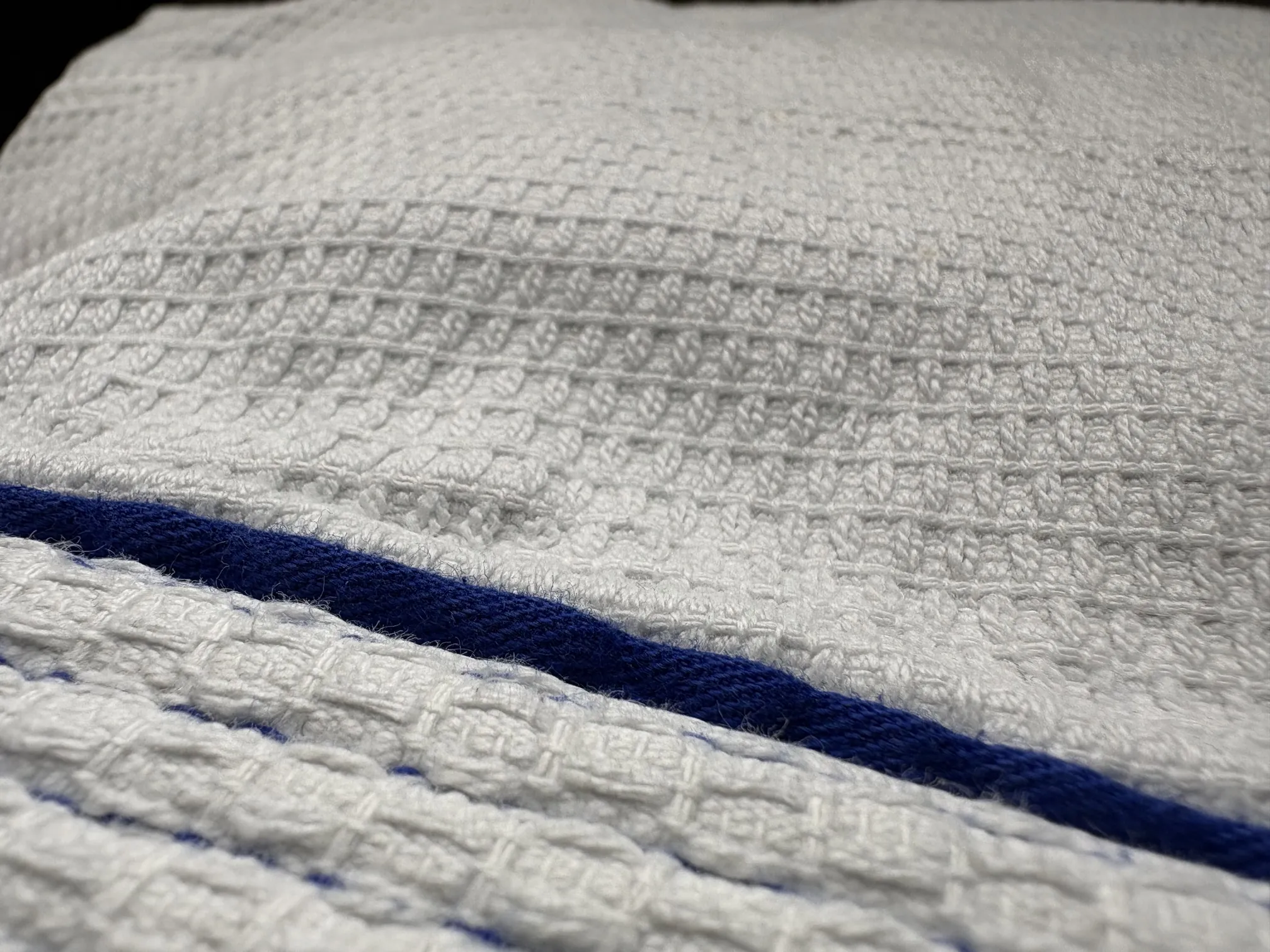
Gold weave sits between single and pearl weave — generally in the 350–450 GSM range, with a different thread structure that gives it a distinctive feel and appearance.
It’s slightly heavier and has a losser construction than pearl weave and tends to shrink a bit more because of how the threads are interlocked. Gold weave gis also have a more old-school look and feel. Some practitioners prefer it, and it still shows up in the lineup of a number of brands. It’s a legitimate option, just not the direction the market has broadly moved.
Pearl weave
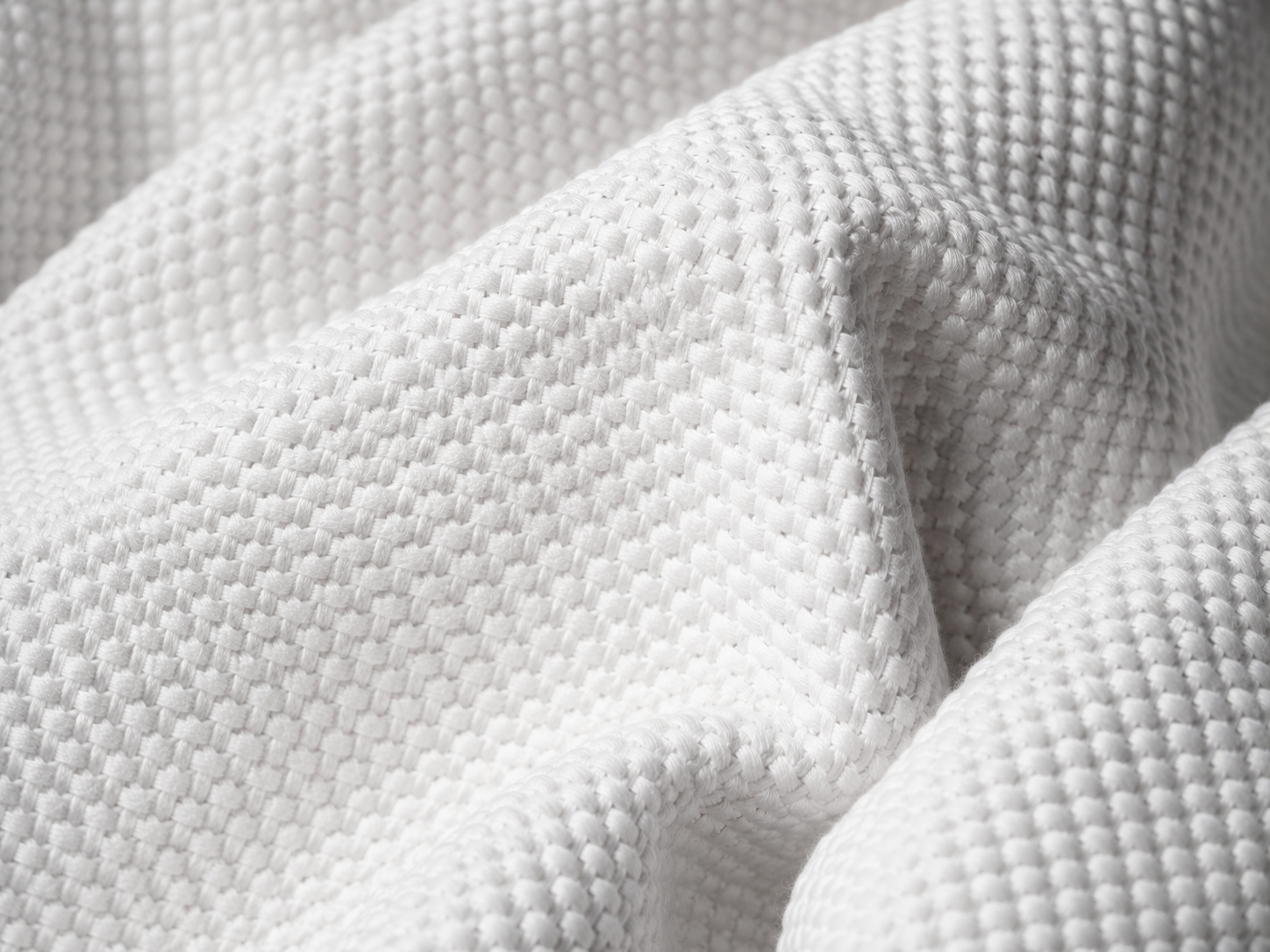
Pearl weave is the current standard for BJJ training gis, and there’s a straightforward reason for that.
The interlocking pattern produces a fabric that’s strong under grip pressure, holds its shape through repeated washing, and manages weight efficiently. A 450 GSM pearl weave gi is meaningfully more durable than a 400 GSM single weave gi at the same price point — the construction carries more of the load than the number alone.
It’s also the reason most serious training gis are built on pearl weave. Not because it’s trendy, but because it handles the actual demands of the sport better than the alternatives at a reasonable weight.
The Heritage BJJ Gi is built on 450 GSM pearl weave. That was a deliberate choice, not the cheapest option available, but the most proven construction for people who train consistently.
Double weave
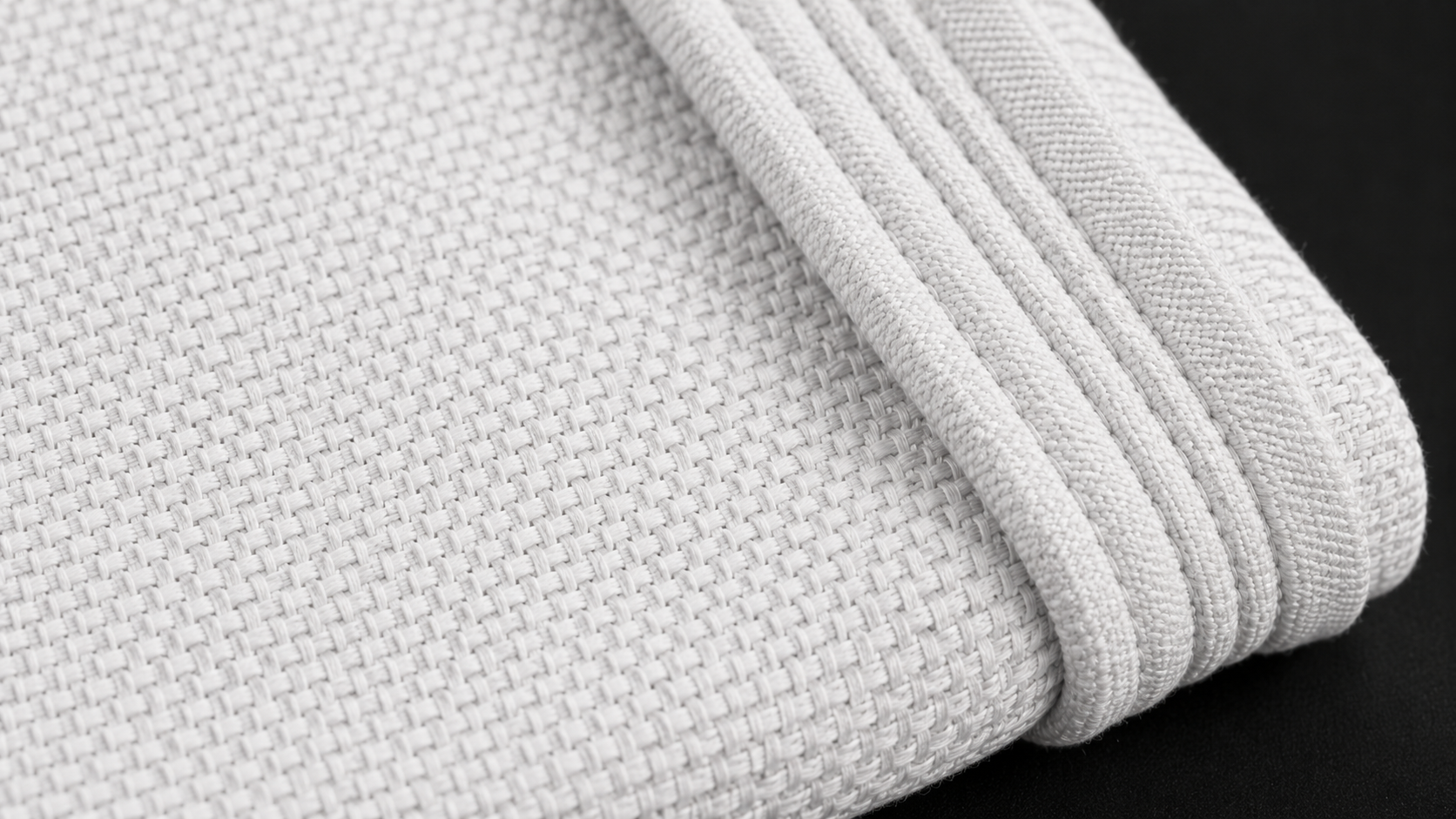
Double weave is the heaviest option, typically ranging from 500–800 GSM. The fabric is dense, stiff, and extremely difficult to grip.
For BJJ, it’s largely old school at this point. The weight makes it uncomfortable for longer sessions, and the stiffness limits mobility in ways that matter for ground work. You still see it occasionally, but it’s not where the market is.
In Judo, double weave is still the standard. Judogis are built much heavier by design — the sport’s grip-intensive throwing demand calls for it. It’s not an obsolete construction, just one that fits a different discipline.
What about specialty weaves?
Walk through any gear site and you’ll find weave names you don’t recognize. Honeycomb weave. Waffle weave. Ripple weave. Star, hybird, flex and everything in between! Various branded patterns that sound proprietary.
Here’s the honest version of what most of that is: branded names applied to slight pattern variations on pearl weave. The underlying construction almost the same in most cases. The pattern looks a little different. Some brands use unique visual textures as a design feature, and there’s nothing wrong with that, but it rarely changes how the gi performs in any meaningful way.
The exception is specialty fabric technology, gis that incorporate lighter materials, moisture-wicking components, or structural innovations that genuinely change the weight-to-durability ratio. Those exist and are worth paying attention to, but they will cost you a pretty penny. The difference is that a real construction change affects performance. A renamed pattern mostly affects the product description.
When you see a specialty weave name, ask what’s actually different about the construction, not just the pattern.
How GSM and weave type work together
This is the part that gets overlooked.
GSM and weave type are not independent variables. A 450 GSM pearl weave gi performs differently from a 450 GSM gold weave gi. The same number means different things depending on how the fabric is structured.
What you’re looking for is the combination: a proven weave type at a weight that makes sense for the type of training you want to do. Pearl weave in the 400–500 GSM range is where that combination is most reliable right now. It’s not the only option — but it’s the one with the most consistent track record across real training environments.
Construction decisions compound. A brand that publishes its GSM, names its weave type, and explains why it made those choices is giving you something to evaluate. A brand that skips those details is giving you less to work with and sometimes, thats on purpose. Transparancy is not something all brands are willing to do, especially if you’ve been cutting corners to get better margins!
The bottom line
GSM tells you how dense the fabric is. Weave type tells you how it’s structured. Neither number means much without the other.
For everyday BJJ training, 400–500 GSM pearl weave is the most proven combination. It holds structure under grips, survives repeated washing, and manages weight well enough to train in without fighting the gi. At the end of the day, its still a preference based decision.
Specialty weave names are often marketing. Real construction improvements are based on lighter materials, better durability-to-weight ratios and are worth paying attention to. Pattern names usually aren’t.
If you want to see what these decisions look like in practice, the Heritage BJJ Gi spec sheet is public. 450 GSM pearl weave jacket. 10 oz ripstop pants. Every material decision explained. No guessing.
If you’re choosing between sizes, the BJJ gi sizing guide covers the A0–A5 system, how to measure yourself, and what to do when you’re between sizes.