
The complete no-gi BJJ sizing guide for rashguards, spats, and shorts. Learn how compression fit works and how to find the right size.
This no-gi BJJ sizing guide covers everything you need to know before buying rashguards, spats, and shorts.
No-gi gear is more forgiving than a gi, the fabric stretches, the fit has more flexibility, and most body types can find something that works comfortably without the same sizing anxiety. That said, there are still things worth knowing before you buy.
Compression fit feels strange at first. Sleeve length matters more than people expect. And shorts have competition rules attached to them that catch beginners off guard. If your proportions do not match the standard sizing template, you will have decisions to make.
This guide covers all of it so you can order with confidence. If you’re more of the visual type, we’ve made a detailled video on our YouTube channel that you can find here.
Rashguard sizing, fit is about compression, not just measurements
Rashguard sizing works differently from gi sizing. With a gi, the goal is finding a cut that matches your body dimensions closely. With a rashguard, the fabric does a significant amount of the work for you.
A good rashguard is made from a high-stretch performance blend, typically 80% polyester and 20% spandex, that moves naturally with your body regardless of minor sizing variation. This means that unlike a gi, where being between sizes creates a real problem, being between sizes in a rashguard usually just means choosing based on preference rather than precision.
The real question with rashguard sizing is not “does this match my measurements,” it is “how much compression do I want?”
Understanding compression fit, and why it feels strange at first
If you are new to rashguards, the first time you put one on properly is going to feel unusual. It is tight. It conforms to your body. It does not drape or hang the way a regular training shirt does.
That is exactly how it is supposed to feel.
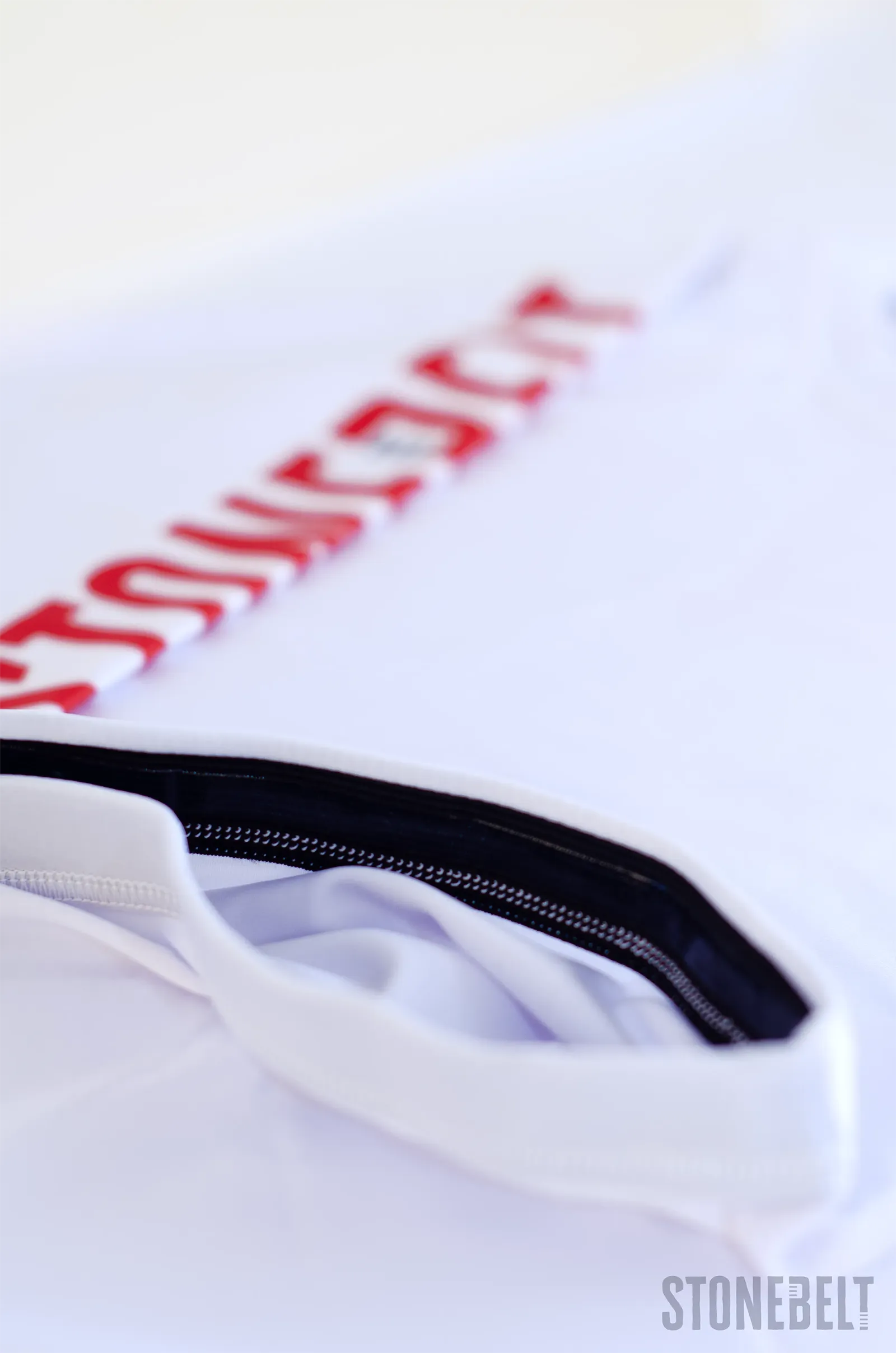
A proper compression rashguard sits close to the skin across the chest, shoulders, back, and arms. It should feel supportive without restricting your breathing or movement. When you raise your arms overhead or shoot for a takedown, it moves with you. When you are in a scramble, it stays in place rather than riding up or bunching.
The instinct for many beginners, especially those who are not used to form-fitting athletic wear, is to size up to feel less exposed or more comfortable. This is understandable. But a rashguard that is too large loses its functional purpose. It bunches under a gi, rolls up during scrambles, and needs to be constantly adjusted, exactly what you do not want when you are trying to focus on your training.
This is something worth being honest about as a practitioner. As someone who has personally had to work through the discomfort of wearing tight compression gear, the unfamiliarity of it, the self-consciousness that comes with it early on, the experience on the mat eventually changes your perspective. When the gear fits properly and stays where it belongs, you feel more confident and more comfortable during training, not less. The tightness stops feeling strange and starts feeling like support.
Give yourself a few sessions. The fit becomes natural quickly.
How to choose your rashguard size
Most rashguard brands size using standard S/M/L/XL or a numeric waist/chest measurement. Unlike gi sizing, there is no specialized alpha-numeric system to decode.
Start with your chest measurement for the upper body fit, and your weight as a secondary reference. Most brand size charts will give you both. When in doubt between two sizes, consider which direction you want to go on compression, tighter and more supportive, or slightly looser and more relaxed.
For most practitioners, the standard recommended size based on chest measurement will be the right call. The stretch in the fabric accommodates natural body variation better than woven fabrics do.
One thing to watch for with long sleeve rashguards: sleeve length.
If you are shorter or have shorter arms relative to your torso, you may find that a size that fits well through the chest and shoulders leaves some excess fabric at the wrist. This is a common experience for stockier or shorter builds. The practical reality is that you have two options, accept a small amount of excess at the wrist in your correct size, or size down for a better sleeve length at the cost of more compression through the torso. Neither option is wrong. It comes down to what bothers you less on the mat.
For shorter and stockier practitioners, living with a little wrist excess in the right torso size is often the more comfortable long-term choice.
Explore the Stonebelt Heritage Long Sleeve BJJ Rashguard and the Legion Short Sleeve BJJ Rashguard, both sized consistently with chest measurement as the primary reference.
Long sleeve vs. short sleeve, does sizing differ?
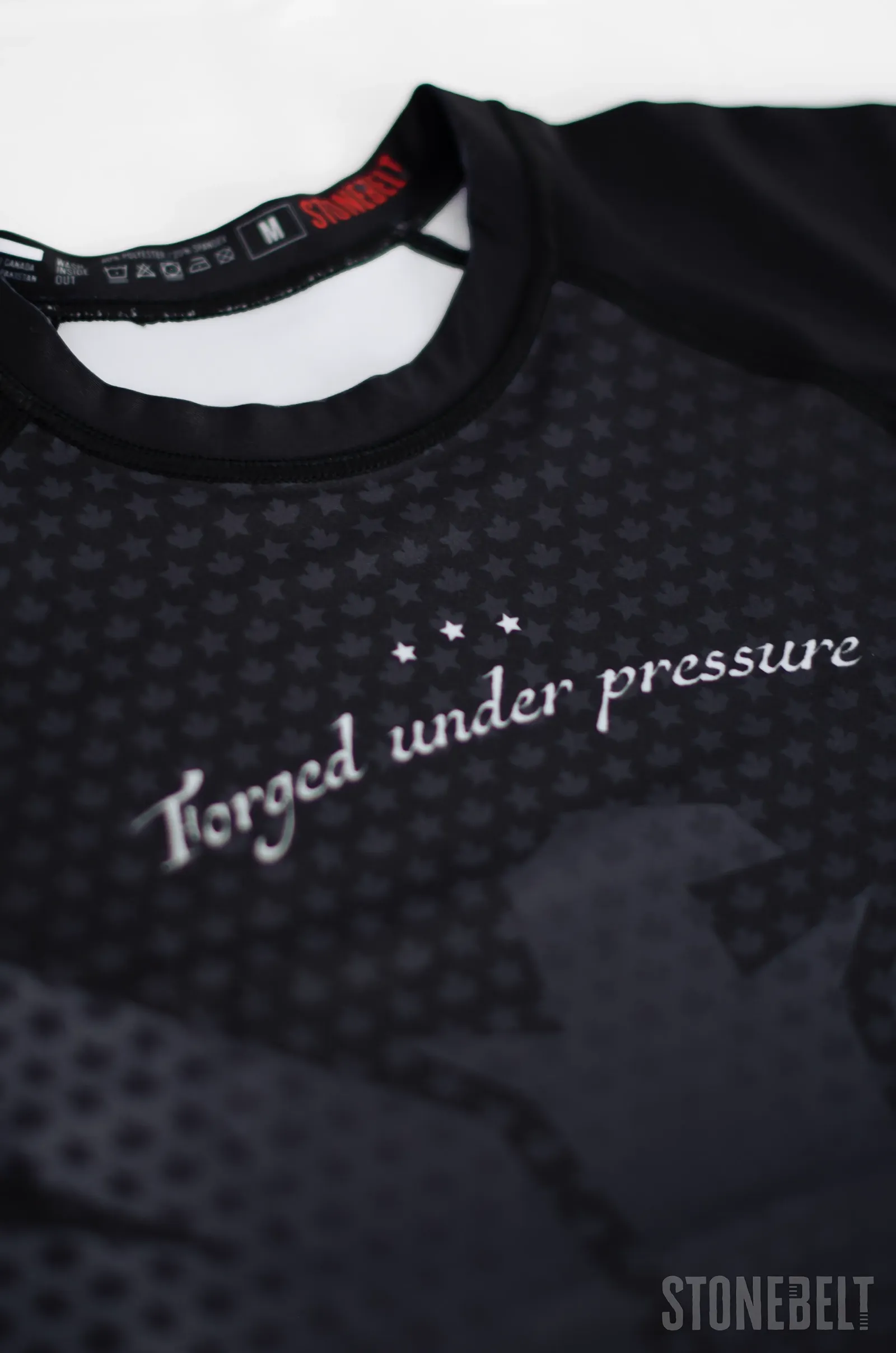
The sizing between long sleeve and short sleeve rashguards from the same brand is generally consistent through the torso. The difference is purely in sleeve length and coverage preference, not in how the chest, shoulders, or waist fit.
If you size correctly in a short sleeve, you will size the same in a long sleeve from the same brand. The sleeve length consideration above applies specifically to long sleeve options for shorter builds, it is not a sizing issue as much as a proportional one.
For a full breakdown of how to choose between long sleeve and short sleeve for BJJ, the Stonebelt rashguard comparison guide covers that decision in detail.
The full article can be found here: long-sleeve-vs-short-sleeve-rashguard
Spats sizing, coverage, length, and the shorter build reality
Spats are the lower body equivalent of a rashguard, a compression legging designed for no-gi training that provides skin coverage, reduces mat burn on the legs, and adds a layer of muscle support during longer sessions.
Sizing for spats typically follows waist measurement, similar to regular athletic leggings or compression tights. Most practitioners find that their spats size corresponds closely to their shorts size. If you wear a medium in BJJ shorts, a medium in spats from the same brand will usually be the right starting point.
The main fit consideration unique to spats is length. Spats are designed to run full length to the ankle. For practitioners with shorter legs relative to their waist size, a common experience for stockier or shorter builds, the correct waist size may leave some excess fabric at the ankle.
As with long sleeve rashguards, you have two options. Size down for a better ankle length, and the waist and thighs will fit with more compression. Or stay in your correct waist size and accept a small fold at the ankle. The flexible nature of spats fabric means both approaches are workable on the mat, it is a preference call, not a functional one.
For shorter practitioners, the honest answer is that some excess at the ankle is simply part of training in standard-sized gear unless you go custom fitted, which is uncommon and rarely worth the cost for most people. It is a minor reality that most shorter grapplers learn to accept without it affecting their training.
BJJ shorts sizing, and the competition rule most beginners miss
BJJ and MMA shorts occupy a middle ground between casual athletic shorts and the very short, minimal cuts of Muay Thai boxing shorts. They are longer than striking shorts, built for ground movement, and designed to stay in place during takedowns, guard work, and scrambles.
Sizing for BJJ shorts follows standard waist sizing. Check the brand’s waist measurement chart and size accordingly. The fit through the waist and hips is the priority, length is fairly standard across the category and does not vary the way spats length does.
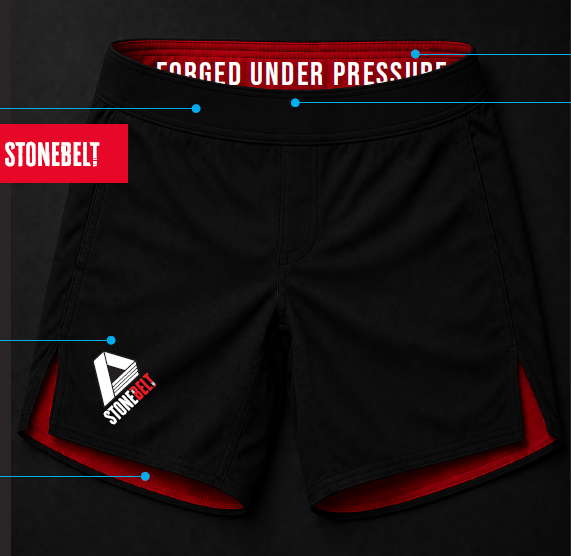
The one thing beginners consistently miss: pockets.
BJJ shorts must be free of pockets for competition. Most sanctioning bodies will not allow shorts with pockets or open holes, fingers and toes can catch in them during grappling exchanges, creating both a safety hazard and a competitive disadvantage. If you plan to compete at any point, even at a local open mat tournament, check that your shorts are pocket-free before you show up. Arriving with non-compliant shorts means you do not compete.
Even for gym training, pocket-free shorts are simply cleaner and safer for your training partners. It is worth making it a standard from the beginning.
The overall picture, no-gi gear is forgiving by nature
The biggest difference between sizing no-gi gear and sizing a gi is the margin for error. No-gi gear stretches. It accommodates variation. The same rashguard that fits a 180 lb athletic build will fit a 195 lb stockier build differently but still functionally.
This does not mean sizing does not matter. It means the consequences of being slightly off are much less severe than with a gi. You are not going to end up with a rashguard that is too short in the torso or too tight in the shoulders the way you might with a poorly fitting gi.
What it does mean is that the sizing decision for no-gi gear comes down more to personal preference than precision measurement. How much compression do you want? Do you prefer more coverage or less? Are you willing to accept some length excess for a better torso fit, or would you rather size down and deal with more compression?
Those are preference questions, not technical ones. And most practitioners figure them out quickly once they have a session or two in properly fitted no-gi gear.
Free size exchange, try it without the risk
As with all Stonebelt gear, your first size exchange is free. If the rashguard does not fit the way you expected, swap it for a different size at no extra cost.
No-gi sizing is forgiving. Our exchange policy makes it even more so.
If you are ready to find your fit, start with the Heritage Long Sleeve BJJ Rashguard or the Legion Short Sleeve BJJ Rashguard, built for serious training, sized to perform.